
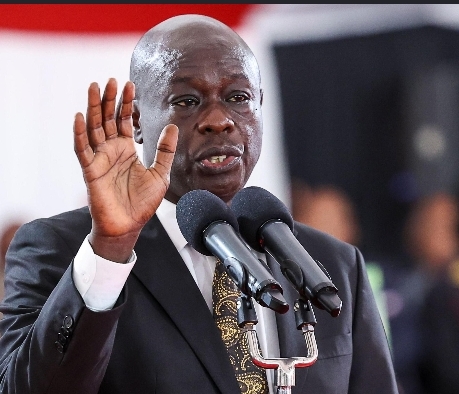
The High Court has upheld the impeachment of former Deputy President Rigathi Gachagua, affirming that Parliament acted within the Constitution in removing him from office.
In a judgment delivered on Monday, June 8, at the Milimani Law Courts in Nairobi, a three-judge bench ruled that the impeachment process undertaken by the National Assembly and the Senate met all legal and constitutional requirements.
The bench, comprising Justices Fred Ogola, Freda Mugambi, and Antony Mrima, found that the proceedings complied with constitutional provisions, including the right to a fair hearing, and that the threshold for removal from office had been duly met.
“There is no proof that MPs, Senators, and Speakers of the National Assembly and Senate were biased in Gachagua’s impeachment. The mere fact that MPs and Senators publicly supported or opposed the impeachment of Rigathi Gachagua cannot establish constitutional bias. The allegations of bias, pre-determination and conflict of interest advanced by the petitioners against Speakers of the National Assembly and Senate, MPs and Senators are not substantiated,” Justice Ogola stated.
The judges further held that Parliament exercised its oversight mandate within the law, dismissing claims that the process was unconstitutional or procedurally flawed.
The court emphasized that impeachment is a constitutional mechanism available to Parliament, noting that courts will not interfere with such decisions where due process has been properly followed.
Gachagua had moved to court seeking to overturn his impeachment, arguing that it violated his rights and failed to meet constitutional and procedural standards.
In its analysis, the court examined the conduct of the National Assembly during the initiation and debate of the impeachment motion, as well as the Senate’s role in hearing and determining the charges.
The judges found that both Houses of Parliament adhered to the required procedures, including granting the former Deputy President an opportunity to respond to the allegations against him.
According to the ruling, the timelines applied during the process were within acceptable legal limits and did not prejudice his defence.
The bench also held that the Senate properly exercised its quasi-judicial role, sufficiently considering the evidence and arguments presented before reaching its final determination.




Leave a Comment
Comments are moderated and will appear after approval.